#1 Origins
The Ground Beneath
1/19/20262 min read
Beneath the Noise: What the Earth Remembers
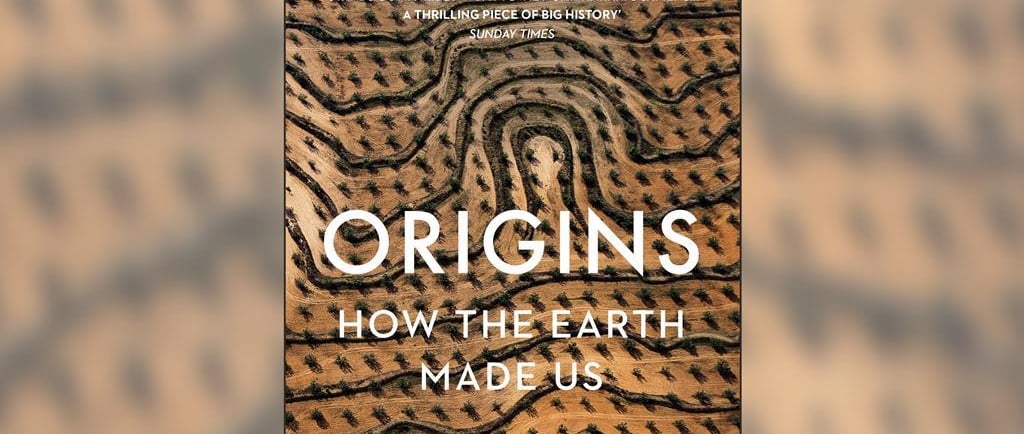
I have spent the last few days sitting with the weight of Lewis Dartnell’s Origins: How the Earth Made Us. It is a book that doesn't just teach you history; it ruins your ability to watch the news without looking for the "invisible hand" of geology. It forced me to ask: if the Earth dictated the rise of ancient Mesopotamia and the voting patterns of the American South, what is it dictating right now?
As I looked at the headlines from Ukraine, Gaza, and Iran, I felt a sudden, sharp disconnect between the stories we are told and the ground the wars are being fought on.
The Deception of Sacred Ground
In Origins, Dartnell explains how the closing of the ancient Tethys Ocean created the geography of the Mediterranean and the Middle East. It gave me the idea to look deeper into the "holiness" of the Levant. While the world debates religious borders in Israel and Palestine, the geology points to the Levant Basin.
Because of that ancient ocean’s death, massive natural gas reserves are trapped under the seabed. It made me realize that "sacred ground" is often a convenient narrative for resources that are far more material. We hear about divine right; the Earth whispers about energy independence.
The Shield and the Steppe
Dartnell’s description of the "Ukrainian Shield"—a 3.5-billion-year-old slab of crust—completely reframed the war in Ukraine for me. I began to see that the "clash of cultures" between Russia and the West is happening on top of a literal treasure chest of lithium and titanium.
History has shown that governments rarely ask people to sacrifice themselves for a mineral deposit; they ask them to fight for a flag. But once you read Origins, you can’t un-see the fact that Russia isn't just moving toward a border; it is moving toward the iron-rich foundations of the Earth that will power the next century.
The Tectonic Puppet Master
In Iran (Persia), the religious agenda of the state feels inseparable from its power. But Origins highlights how the collision of the Arabian and Eurasian plates didn't just create the mountains of the region—it created the perfect geological "traps" for the world's oil.
The struggle for the Strait of Hormuz isn't a holy war; it’s a geographical one. We are watching a species fight for control over a tectonic bottleneck.
A Quiet Realization
Reading this book has been a humbling, somewhat lonely experience. It makes you realize that the ideologies we cling to—the religions we use to justify our borders and the politics we use to define our identities—are often just the "marketing" for a much older, more primal competition for the Earth’s elements.
Governments push a religious or moral agenda because it is a more powerful motivator than a geological survey. But the truth is hidden in the stone. We aren't just fighting for what we believe in; we are fighting for what the Earth decided to bury in certain places millions of years ago.
I find myself less interested in the speeches now, and more interested in the maps.
“My only loyalty is to the truth I haven't discovered yet.”